
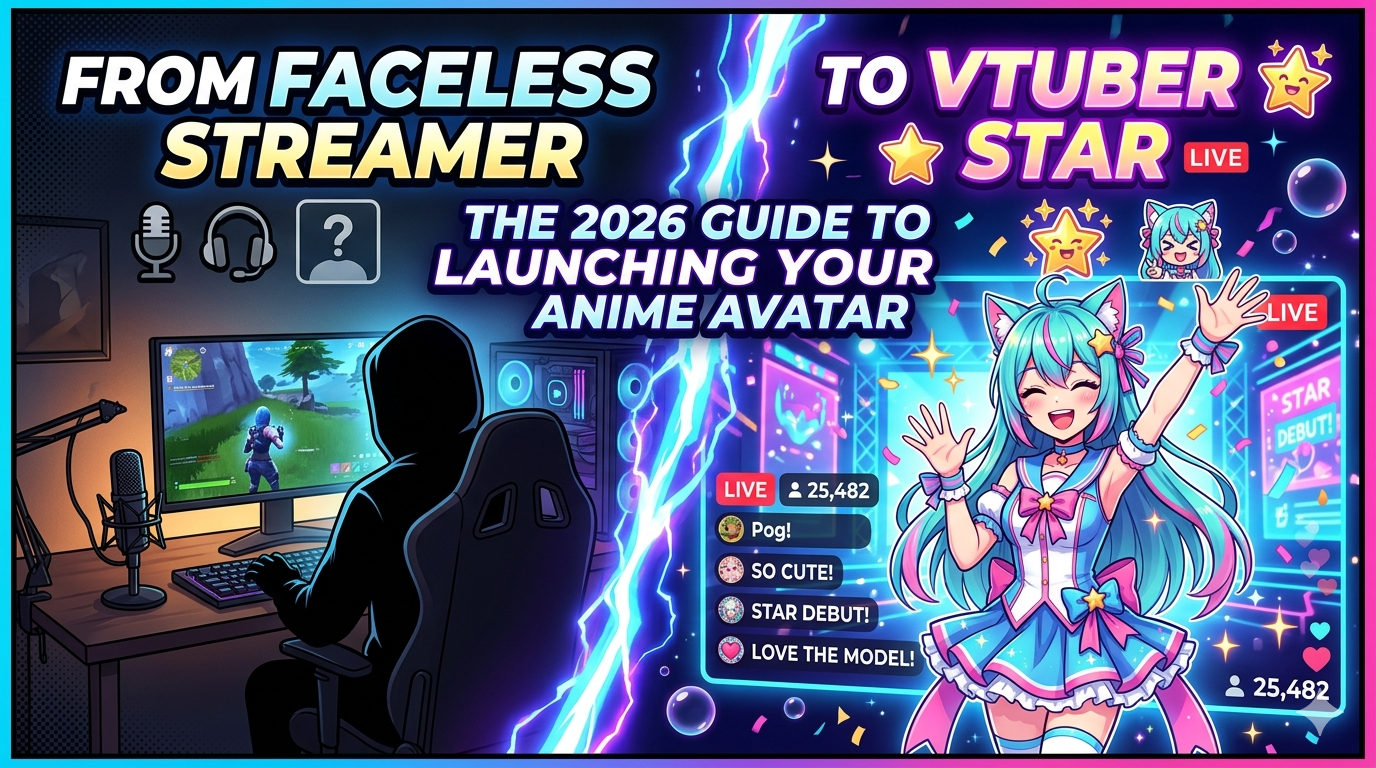
 Five years ago, the idea of an animated anime character with millions of YouTube subscribers and a Forbes profile would have sounded like a fan-fiction premise. Today, it’s a career path. VTubers — content creators who appear on stream as 2D or 3D animated avatars rather than their real faces — have become one of the fastest-growing creator categories in the world, pulling in everything from teenage gamers to retired teachers reinventing themselves anonymously.
If you’ve considered going faceless, or you’re tired of being recognized at your day job because of your TikTok, the VTuber route deserves a serious look. The barriers to entry are lower than they look, but the path is full of decisions most newcomers make in the wrong order. Here’s the playbook that separates a clean debut from the thousand channels quietly archived three months in.
Why VTubing Exploded
Estimates from the streaming analytics community put VTuber-related content at over 8 billion views per month across YouTube and Twitch combined heading into 2026. The top earners — VShojo’s Ironmouse, Hololive’s Gawr Gura, indie streamers like CDawgVA’s animated alter ego — clear seven-figure incomes. But the long tail is just as interesting: thousands of mid-tier VTubers earn $30,000-$150,000 per year, often part-time, while remaining completely anonymous to their families and coworkers.
Three forces drive the growth:
- Privacy without sacrificing personality. You can be wildly expressive on stream without ever showing your face, your apartment, or anything that could dox you.
- The anime aesthetic is mainstream. What was niche a decade ago is now Netflix’s biggest content category and a core part of Gen Z’s visual language.
- Production costs collapsed. A debut-ready Live2D model that would have cost $8,000 in 2018 now costs $1,500-$3,000 from a quality rigger.
The result: an enormous influx of new creators, which is exactly why getting your launch right matters. The market rewards distinctive personas and quietly punishes generic ones.
Step 1: The Persona Comes Before the Model
The biggest mistake new VTubers make is commissioning their character art first and trying to figure out personality second. The character is the visualization of a persona — not the persona itself. If you don’t know who your character is before the artist starts drawing, you’ll spend the next year trying to retrofit a personality onto an avatar that doesn’t quite fit.
Spend a week answering, in writing:
- Who is this character? (Species, age, vibe, era)
- What’s their backstory and lore?
- What energy do they bring? (Chaotic gremlin, soft-spoken collector, deadpan analyst, hyperactive idol)
- What content vertical fits? (Gaming, ASMR, art streams, Just Chatting, reactions, lore deep-dives)
Once those are clear, naming becomes natural. A name should signal the persona instantly — Ironmouse sounds like a chaos goblin, Shoto sounds like a polished anime protagonist, Filian sounds like a chronically online weirdo. They feel right before you’ve watched a single second of the streams.
If you’re stuck — and most people get stuck here — running prompts through an AI name generator can rapidly surface options you’d never brainstorm alone, including options in Japanese, Latin, Norse, and constructed-language styles that fit anime conventions. The same tool can spin up a starter logo or wordmark, which becomes useful when you start designing your stream overlays a few months later. Your shortlist should have ten or twelve names before you commit to one.
Step 2: Verify Your Name Isn’t Already Taken
This is the step that destroys 80% of VTuber launches before they even begin.
Picking a name without checking who else uses it is how you end up six months in, growing nicely, and then receiving a polite-but-firm DM from an established VTuber who’s been using a near-identical name since 2022. Or worse — a Twitch trademark complaint that nukes your channel and your hashtag along with it.
Before you commission anything, before you announce anything, before you even reserve social handles, run your shortlist of names through a name uniqueness checker. The tool surfaces existing creators, businesses, and registered marks using identical or visually similar names — including the soundalikes that human searching tends to miss. “Ryū,” “Riu,” “Ryu,” and “Ryuu” all look different in text but read identically in stream chat, where viewers will misspell their way into someone else’s audience.
Run two passes:
- Strict check: exact name. Anyone using it currently across creator platforms?
- Loose check: phonetic and visual variants. Anyone close enough that viewers would confuse you?
Only when both come back clean should you move forward. The five minutes you spend here saves you the brand reset that ruins so many VTuber Year Two arcs.
Step 3: Commission the Character Design
With persona and name locked, the design phase becomes much faster. You’ll typically commission this in two stages:
Concept and reference sheet ($300-$800). Front, back, and three-quarter views of the character. Color palette, outfit details, and key expressions. This is what you’ll send to your model rigger later, so it has to be precise.
Full illustration ($800-$2,000). A polished single-pose illustration used for thumbnails, social media, and merch. This is also the visual that lives in viewers’ heads — make it count.
What separates a forgettable VTuber design from a memorable one is silhouette and signature element. Filian’s mismatched outfit, Pekora’s giant pink rabbit ears, Ironmouse’s devil horns — each is recognizable at thumbnail size. If your design needs to be viewed at full resolution to identify, redesign it.
Step 4: Live2D vs. 3D — The Big Technical Choice
Live2D ($1,500-$3,500 to rig.) Your 2D illustration is broken into layers and given motion via face-tracking software. Cheaper, faster to debut, perfect for Just Chatting and game streams. Most successful VTubers start here and never leave.
3D model ($4,000-$15,000 to build.) A full 3D character with bones, blendshapes, and full-body motion via VR tracking or a mocap suit. Necessary for dance content, VRChat collaborations, and cinematic videos. Also the gateway to concert events and merch dimensions like figures and acrylic stands.
Start Live2D. Upgrade to 3D when sponsorships pay for it.
Step 5: The Debut Mechanics
Once you have a model, the actual launch checklist is shorter than expected:
- Twitch and YouTube channels (matching handles, claimed simultaneously)
- A Discord server, even if empty
- Stream overlays, alerts, and emotes (often the same artist who did your character can do these)
- A debut video — animated, scripted, two to four minutes; this is where many indie VTubers spend their largest single budget
- A consistent stream schedule for the first 90 days
The debut video matters more than any other single asset. It’s the post that shows up everywhere, gets clipped into compilation reels, and shapes how the VTuber community first encounters you. Don’t cheap out.
The Quietly Important Privacy Layer
Becoming a VTuber is, to a meaningful extent, a privacy project. The whole point is operating publicly without exposing your real identity. That means treating every signup along the way — art commission platforms, Discord bots, Twitch extensions, beta tools, sponsorship outreach forms, fan-art submission portals — as a place where personal data could leak.
Most experienced VTubers maintain a strict separation: real email for taxes, banking, and the platforms that actually pay them; a disposable email service for everything exploratory or unverified. If a service turns out to be sketchy or starts spamming, the throwaway address simply expires and the VTuber identity stays clean. It’s a tiny habit that has saved more than one creator from a doxxing attempt — especially during the early months when you’re testing every tool the community recommends.
Realistic Cost Breakdown for a Solid Debut
| Item | Range |
|---|---|
| Character concept + reference sheet | $400 – $800 |
| Full character illustration | $800 – $2,000 |
| Live2D rigging | $1,500 – $3,500 |
| Stream package (overlays + alerts + emotes) | $400 – $1,200 |
| Debut animation | $500 – $3,000 |
| Music and jingles | $100 – $500 |
| Total realistic minimum | $3,700 – $11,000 |
The lower end is achievable if you commission a single artist who can handle illustration, design, and overlays. The upper end gets you a polished, sponsorship-ready debut with original music and a cinematic intro.
Final Word
VTubing is no longer the niche corner of streaming it was in 2020. It’s a legitimate creator economy with tooling, agencies, conventions, and recognizable career paths. But it rewards creators who plan their persona carefully, verify their name’s availability, and treat the launch as a project rather than an impulse.
Pick the persona first. Lock the name properly. Spend on rigging, not gimmicks. And keep a clean separation between your VTuber identity and your real one from day one. The creators who follow this order are the ones still streaming three years from now — the ones still holding the same name, the same audience, and the same anonymity they started with.